If you are thinking about buying a rental property in North Buckhead, you need more than a headline about Buckhead prestige. You need to know what types of rentals actually exist, what rent ranges look like, and where the biggest risks can hide before you buy. This guide will help you sort through the numbers, understand the neighborhood’s layout, and build a smarter rental strategy for North Buckhead. Let’s dive in.
North Buckhead at a glance
North Buckhead is not a one-note rental market. According to the North Buckhead Civic Association, the neighborhood covers roughly 2.5 square miles and includes more than 3,500 owner-occupied residences, split about 48% single-family homes and 52% condominiums. That mix matters because your investment options can look very different from one part of the neighborhood to another.
In practical terms, you are looking at a blended housing market inside Atlanta city limits. There are denser condo and apartment corridors near Lenox, Phipps, and major roads, along with quieter single-family sections farther into the neighborhood. If you are investing here, your underwriting should match the exact property type and location rather than relying on one neighborhood-wide average.
Why investors look at North Buckhead
North Buckhead benefits from a location that remains attractive over time. The neighborhood has access to GA 400, Buckhead MARTA, and nearby Lenox MARTA, which gives renters a mix of driving convenience and transit backup. That setup tends to support demand from renters who want central access but still expect easy car travel.
The area also appears to be relatively stable in value. Zillow’s March 31, 2026 snapshot places the average North Buckhead home value at $672,752, up 1.9% year over year, with homes going pending in about 88 days. That is not a rapid-appreciation story, but it does suggest a higher-priced submarket where values have generally held up.
Another long-term factor is land use. North Buckhead planning materials emphasize preserving single-family sections while steering higher-density redevelopment toward established mixed-use and multifamily corridors along Roswell Road, Piedmont Road, and the Lenox Road and Phipps Boulevard area. For investors, that can support the case for location-driven value and controlled supply in certain parts of the neighborhood.
Property types you will find
Condos and apartments
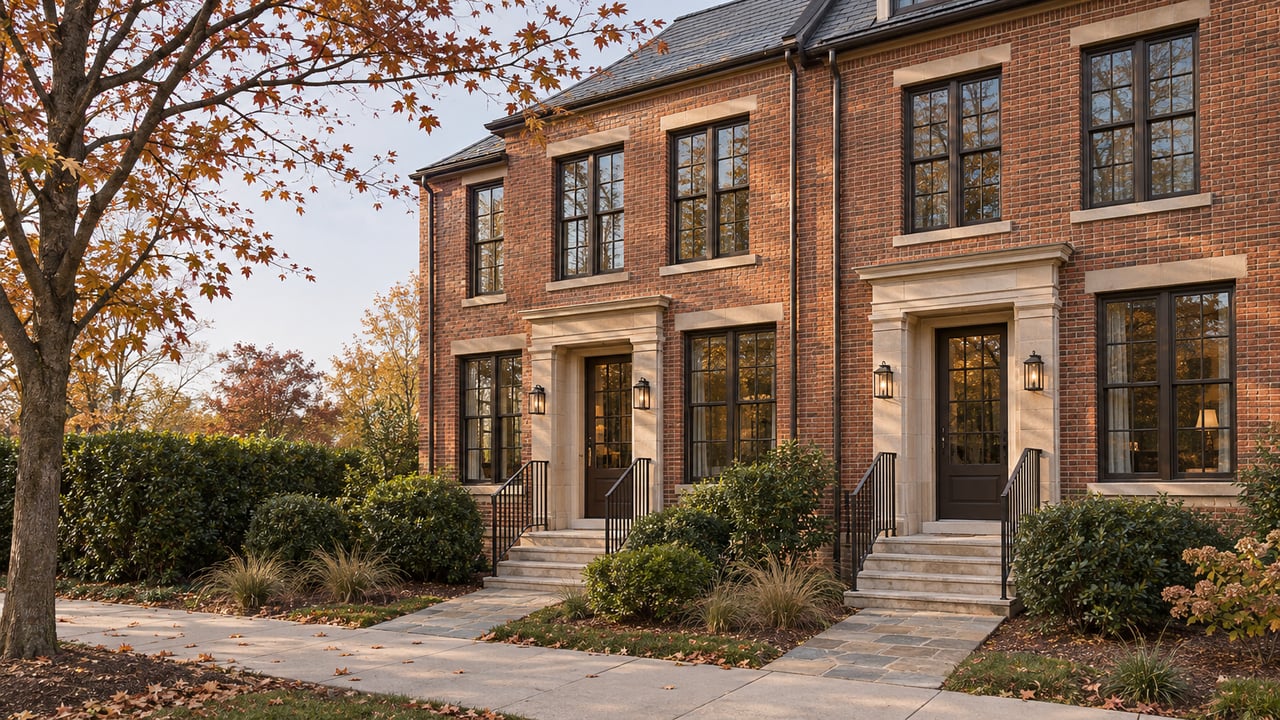
A large share of North Buckhead’s rental inventory is attached housing. The market includes luxury apartments, upscale condos, and townhomes, especially near the major Buckhead commercial corridors. For many investors, this means easier entry pricing than detached homes, but it also means you need to pay close attention to HOA rules and building-level restrictions.
Attached properties may appeal most if you want a lower-maintenance setup or a rental geared toward convenience-focused tenants. They also fit the neighborhood’s existing pattern of denser housing near transit, shopping, and mixed-use areas. Still, not every condo building allows the same leasing flexibility, so the documents matter as much as the unit itself.
Single-family homes
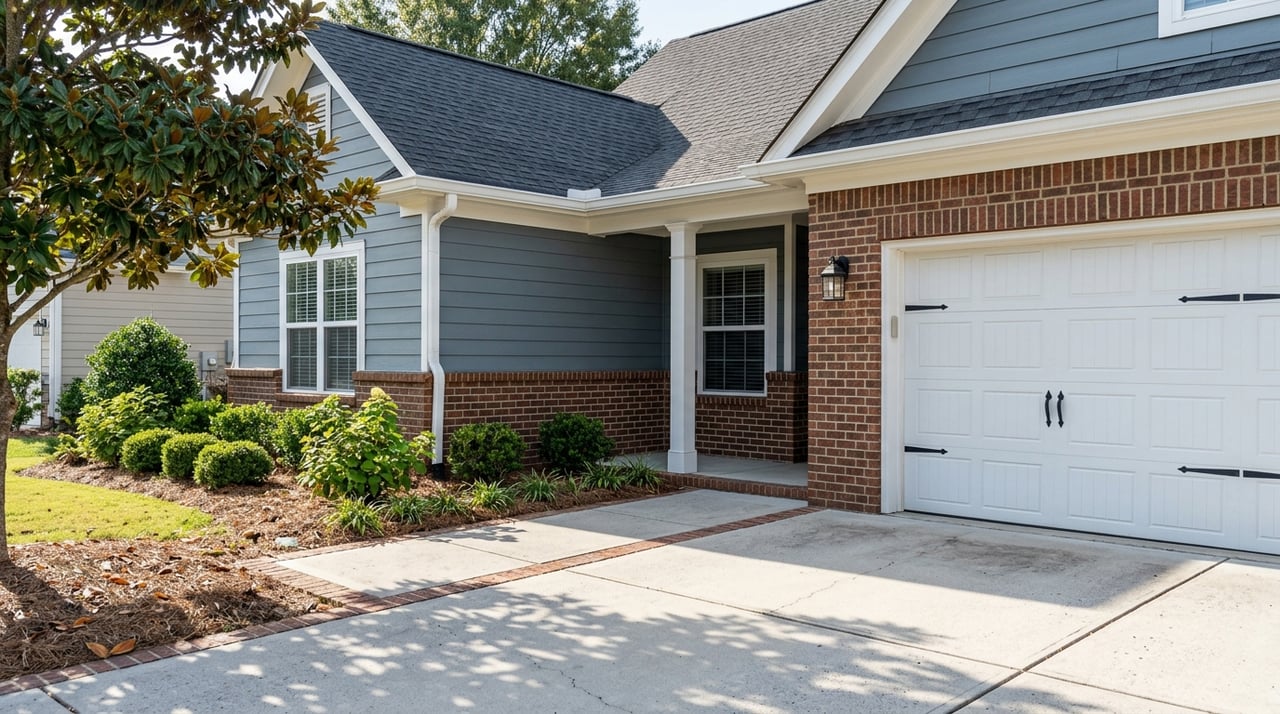
Single-family rentals are a different product in North Buckhead. The neighborhood includes quieter residential pockets with detached homes that can command much higher rents than apartment averages suggest. If you are evaluating a house here, avoid using apartment data as your main rent benchmark.
That is especially important because current asking rents for detached homes can be far above the apartment market. Apartments.com shows examples such as a three-bedroom home at $3,200 per month and larger four- to five-bedroom homes ranging from roughly $5,500 to $10,000 per month. That wide spread tells you to underwrite each home based on its size, condition, and exact location.
What renter demand may look like
North Buckhead appears to attract a renter base that values convenience, access, and a higher-end location. RentCafe estimates that 57% of households in North Buckhead are renter-occupied. That is a meaningful signal that renting is a major part of the local housing picture, not just a small side segment.
Based on the neighborhood’s housing mix, Buckhead location, and access to offices and transit, demand is likely to include professionals, relocating households, roommates in higher-end apartment communities, and downsizers looking for lower-maintenance living. The key takeaway for you is that renters here may be less focused on bargain pricing and more focused on location, condition, and convenience.
North Buckhead rent ranges
If you are screening a deal, start with realistic rent bands instead of chasing one perfect number. Current apartment rents in North Buckhead generally fall into these ranges:
- Studio: about $1,581 to $1,588
- One-bedroom: about $1,796 to $1,886
- Two-bedroom: about $2,490 to $2,618
- Three-bedroom: about $3,679 to $3,793
Both Apartments.com and RentCafe place North Buckhead above the broader Atlanta average. The exact figure varies by source, but the pattern is clear: this is a relatively expensive rental market.
RentCafe also reports that about 39% of rentals in North Buckhead fall between $1,501 and $2,000 per month. That range can be useful if you are evaluating smaller apartment or condo units. It is less useful for detached homes or luxury units, where pricing often sits much higher.
How to think about cash flow
North Buckhead is usually better framed as an appreciation-plus-income market than a pure cash-flow play. Based on neighborhood-wide apartment rent levels and Zillow’s average home value, a rough gross rent-to-value ratio lands around 3.2% to 3.9% before expenses. That is only a directional screening tool, but it helps set expectations.
In other words, you may not buy in North Buckhead for maximum monthly yield alone. You may be buying for a mix of income, location quality, and long-term value in a supply-constrained part of Buckhead. That can still be a strong strategy, but only if the numbers fit your goals.
Use the right benchmark
One of the biggest underwriting mistakes in North Buckhead is mixing unlike property types. Apartment averages are useful for apartment-style assets and some condos. They are usually not enough for a detached house, large townhome, or luxury condo with unique amenities.
Before you move forward, compare your target property against similar inventory in the same submarket and housing category. A one-bedroom condo near Lenox should not be analyzed like a five-bedroom detached home deeper in the neighborhood. Small underwriting shortcuts can lead to big pricing mistakes here.
Zoning and planning matter here
Atlanta’s zoning rules govern use, density, parking, placement, height, and size. The city’s Zoning Division can verify a property’s zoning classification, and the Zoning Review Board and Board of Zoning Adjustment consider recommendations from the relevant Neighborhood Planning Unit. In North Buckhead, that means NPU B can matter when rezonings or variances are in play.
For a standard buy-and-hold rental, zoning may feel straightforward. But if you are considering redevelopment, expansion, or a major repositioning plan, neighborhood planning context becomes much more important. This is not the kind of area where you should assume every concept will fit automatically.
North Buckhead’s master plan is especially relevant. The plan supports preserving single-family areas while encouraging compact, pedestrian-oriented redevelopment in existing commercial and transit-adjacent corridors. That framework can influence where future change is more likely and where lower-density character is more likely to remain.
Short-term rentals are more limited
If you are an out-of-area investor, this is one area where assumptions can cost you. Atlanta’s current short-term rental ordinance is more restrictive than many buyers expect. The city states that a short-term rental license is tied to a primary residence plus one additional dwelling unit, defines a short-term rental as lodging for no more than 30 consecutive days, and says operating without a license is unlawful.
That means many investor-friendly short-term rental models used in other markets may not translate well here. If your strategy depends on short-term rental income, verify city rules before you buy. You should also confirm that the property is inside Atlanta city limits when reviewing city requirements.
HOA review should be part of underwriting
Because North Buckhead includes many condos and association-controlled properties, HOA and condo-document review is not optional. It should be part of your initial screening process, not something you leave for later in due diligence. A unit that looks great on paper can become a poor fit if leasing restrictions are tighter than expected.
At minimum, you should verify:
- Whether leasing is allowed
- Whether rental caps apply
- Whether there is a minimum lease term
- Whether board approval is required before tenant occupancy
- Whether any waitlist or occupancy limits affect rentals
These answers are property-specific, so they need to be confirmed on every deal. In North Buckhead, document review can be just as important as price and rent.
A practical investor approach for North Buckhead
If you are evaluating rental property in North Buckhead, a disciplined approach usually works better than a volume-driven one. This is a neighborhood where details matter, from the exact corridor to the property type to the governing documents. A quick screen based on broad Atlanta averages will not tell you enough.
A smart buying process often looks like this:
- Identify the property type you want to own, such as condo, townhome, or single-family.
- Match rent expectations to that property type, not to a neighborhood-wide average.
- Review zoning and planning context if the strategy involves changes to the property.
- Confirm whether short-term rental assumptions are even viable under current Atlanta rules.
- Review all HOA or condo restrictions before you treat projected rent as real income.
North Buckhead can be appealing if you want a well-located Buckhead asset with a blend of income potential and long-term positioning. The strongest opportunities are often the ones where the property, rent strategy, and legal constraints all line up cleanly from the start.
If you want help evaluating a North Buckhead rental property, working through local pricing, or comparing investment options across north-metro Atlanta, AlpharettaZen Expert Home Advisors offers a consultative, data-driven approach built around clear guidance and neighborhood-level insight.
FAQs
What makes North Buckhead different from other Atlanta rental markets?
- North Buckhead has a blended housing mix of condos, apartments, townhomes, and single-family homes, so investors need to underwrite by property type and location rather than using one broad neighborhood average.
What are typical apartment rent ranges in North Buckhead?
- Current apartment rents are about $1,581 to $1,588 for studios, $1,796 to $1,886 for one-bedrooms, $2,490 to $2,618 for two-bedrooms, and $3,679 to $3,793 for three-bedrooms.
What should investors know about single-family rental pricing in North Buckhead?
- Detached home rents can run much higher than apartment averages, with examples including a three-bedroom home at $3,200 and larger four- to five-bedroom homes roughly between $5,500 and $10,000 per month.
Are short-term rentals allowed in North Buckhead, Atlanta?
- Atlanta allows short-term rentals under stricter rules than many buyers expect, including licensing requirements tied to a primary residence plus one additional dwelling unit, so investors should verify current city requirements before buying.
Why are HOA rules important for North Buckhead rental properties?
- Many North Buckhead properties are condos or association-controlled homes, so investors need to verify leasing rules, rental caps, minimum lease terms, and approval requirements before relying on projected rental income.
Is North Buckhead mainly a cash-flow market for rental investors?
- North Buckhead appears to be more of an appreciation-plus-income market, with a rough gross rent-to-value ratio of about 3.2% to 3.9% before expenses, rather than a high-yield cash-flow market.