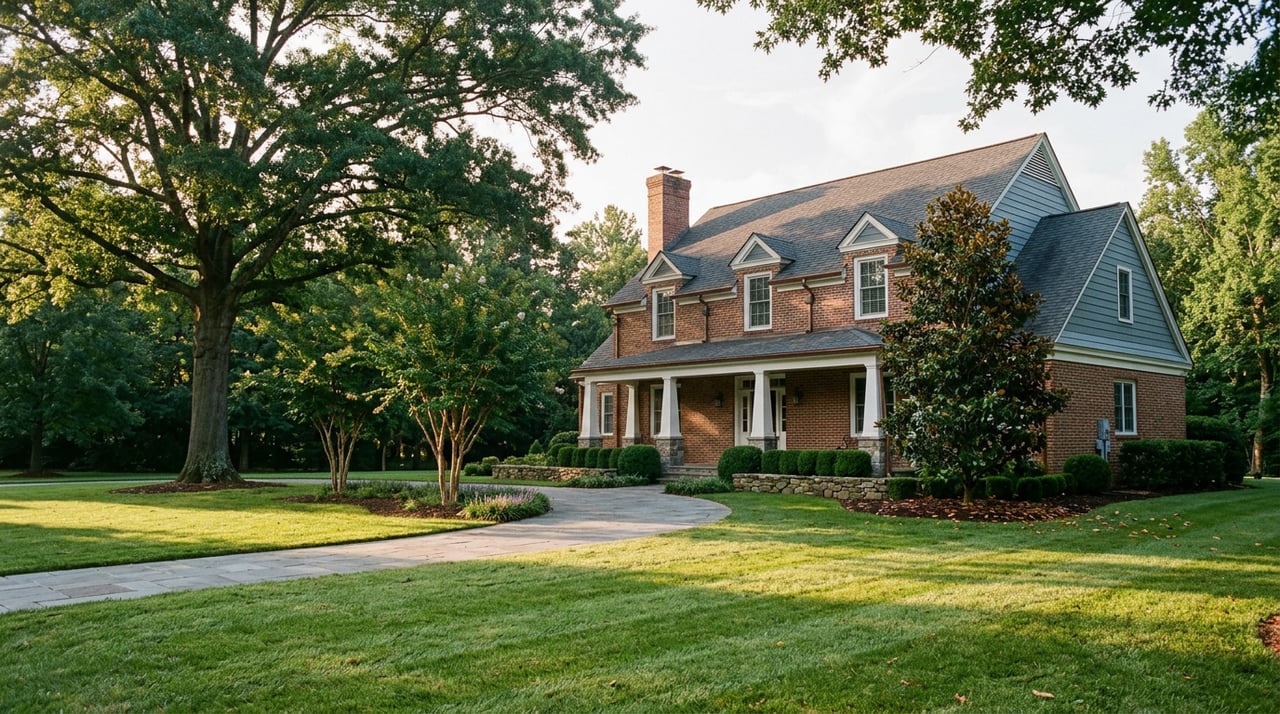
Picture a buyer walking a five-acre parcel off one of Milton's northern roads. The listing agent mentions, almost in passing, that the back half could probably be split off someday. A guest house lot. A gift for a grown child. Maybe just a future sale. That kind of math has driven a lot of Milton purchases over the years, and for good reason: acreage in this city has always carried the promise of more acreage later.
From January 9 until April 13, 2026, the possibility of creating lots under three acres was on hold. On January 9, Milton's City Council approved an emergency moratorium halting new minor-subdivision applications in the city's AG-1 agricultural district that would create lots under three acres. It wasn't a quiet procedural footnote. The council extended it in February, spent weeks fielding public comment, and didn't resolve it until April 13. Anyone who bought acreage during that window with a future split into lots under three acres in mind was buying on hold.
That fight is one part of the land-use context for buyers comparing Milton with nearby suburbs.
Milton's Public Debate Over Minor-Plat Rules
The timeline matters because it shows this wasn't a rubber-stamp update. It was a genuine, contested policy debate that played out in public meetings over most of a quarter.
- January 9, 2026: Council votes 5-1 for an emergency moratorium, stopping acceptance of minor-plat applications in AG-1 that would create lots smaller than three acres.
- February 9, 2026: Council extends the moratorium up to 120 more days, 6-1, after residents raise concerns that shrinking lots would squeeze out the agricultural uses the zoning is supposed to protect.
- April 13, 2026: Council lifts the moratorium and adopts a package of new standards for future minor plats.
City staff described the underlying tension plainly during the process: minor plats, the fast-track subdivision process for splitting land into three lots or fewer, historically skipped the kind of development review that catches stormwater and setback problems before a lot is ever sold. That meant those problems landed on the homeowner after the fact, not on the developer before the sale. Deputy Community Development Director Tracie Wildes told the council that when the analysis happens before a plat is sold, there are fewer problems and better outcomes for everyone downstream.
Mayor Peyton Jamison summed up the mood after the April vote:
"This is one of those processes where we're not going to have 100% winners or 100% losers. But I think that, at the end of the day, we're going to have a better city."
What Changed in April
One important detail for buyers: lifting the moratorium did not loosen the rules. It replaced an outright freeze with a more rigorous, permanent process.
The City of Milton says the April 13 package added a 20-foot natural area setback along roads for any new minor plat, meant to preserve the tree line and rural look from the street. It introduced a Foundation Survey requirement for minor plats, catching problems while there's still time to fix them. It added an As-Built Survey requirement for minor plats, confirming the finished structure actually complies with what was approved.
None of that makes splitting a large parcel impossible. Two examples from the council's own April agenda show what a compliant split looks like under the current rules: a 15.42-acre property on Mountain Road divided into three lots of roughly 3, 3.4, and 9 acres, and an 8.15-acre parcel on Thompson Road divided into lots of 3 and 5.15 acres. Both were approved.
Land in Milton can still be divided. Some splits face a more thorough plat review.
Milton's Prices and the Zoning Context
According to one local market tracker's most recent snapshot, pulled from FMLS and Georgia MLS data as of June 2026, Milton's median sale price stood near $1.1 million, well above the neighboring suburbs it's most often compared against on the portals.
| City | Approximate Median (June 2026 snapshot) |
|---|---|
| Milton | ~$1.1M |
| Alpharetta | $700K-$800K |
| Johns Creek | ~$700K |
| Roswell | $550K-$650K |
The instinct is to explain that gap with bigger houses or better views. The zoning changes provide another piece of context for buyers comparing Milton with nearby suburbs: the city adopted new review standards for future minor plats. The median-price snapshot alone does not establish what causes differences among these cities.
For a buyer comparing Milton to Alpharetta or Roswell on price per square foot alone, zoning is one piece of context beyond the spreadsheet. The April 2026 standards affect future minor plats, and buyers considering acreage should understand how they apply to a specific parcel.
The Sewer Line That Isn't There
There's a second friction that surprises buyers moving from more urban parts of metro Atlanta, and it's connected to the same zoning story.
Most of Milton runs on septic, not municipal sewer. The city's own guidance is direct about it: if you don't pay for wastewater service in Milton, you're almost certainly on a septic system, generally the case for lots of an acre or more. Septic tank permits aren't handled by the city at all. They go through the Fulton County Health Department's North Fulton office in Alpharetta.
This isn't a defect. It's part of the same package that keeps lots large and neighbors distant. But it changes the closing conversation. A buyer who assumes a monthly sewer bill and a straightforward city inspection needs to instead ask for septic maintenance records, system age, and any recent soil testing, especially on a property where a future addition, pool, or barn is part of the plan.
What This Means If You're Looking at Acreage
A few things worth confirming before writing an offer on a Milton parcel, especially one where subdividing or building out is part of the long-term plan:
- Ask what plat review process would apply to a future split.
- Request septic inspection and maintenance history, not just confirmation that a system exists.
- Factor in the 20-foot natural area setback and lot-coverage rules if a new structure or a subdivided lot is part of your plan.
- Treat the April 2026 rules as the current baseline, not a temporary state. The council resolved a genuine debate. It didn't table it.
None of this makes Milton a harder place to buy well. It makes it a place where a buyer considering acreage should understand the land-use rules, rather than comparing median prices across a spreadsheet alone.
Is the moratorium still in effect? No. The council lifted it April 13, 2026, replacing it with the permanent standards described above.
Can a large lot in Milton still be subdivided? Yes. The applicable plat review process depends on the proposed split.
Do all homes in Milton use well and septic? Not all, but it's common on larger parcels. Confirm utility status for any specific property rather than assuming based on the neighborhood.
If you're weighing a Milton acreage purchase against a lot in a neighboring suburb, the zoning history is worth understanding before you compare price tags. Thomas LeCain and the AlpharettaZen team can walk through what a specific parcel's zoning status means for your plans and help you read a Milton listing the way someone who follows this market actually reads one. Schedule your free consultation to start the conversation.
This article is general information, not legal, tax or financial advice. Consult a qualified professional about your situation.