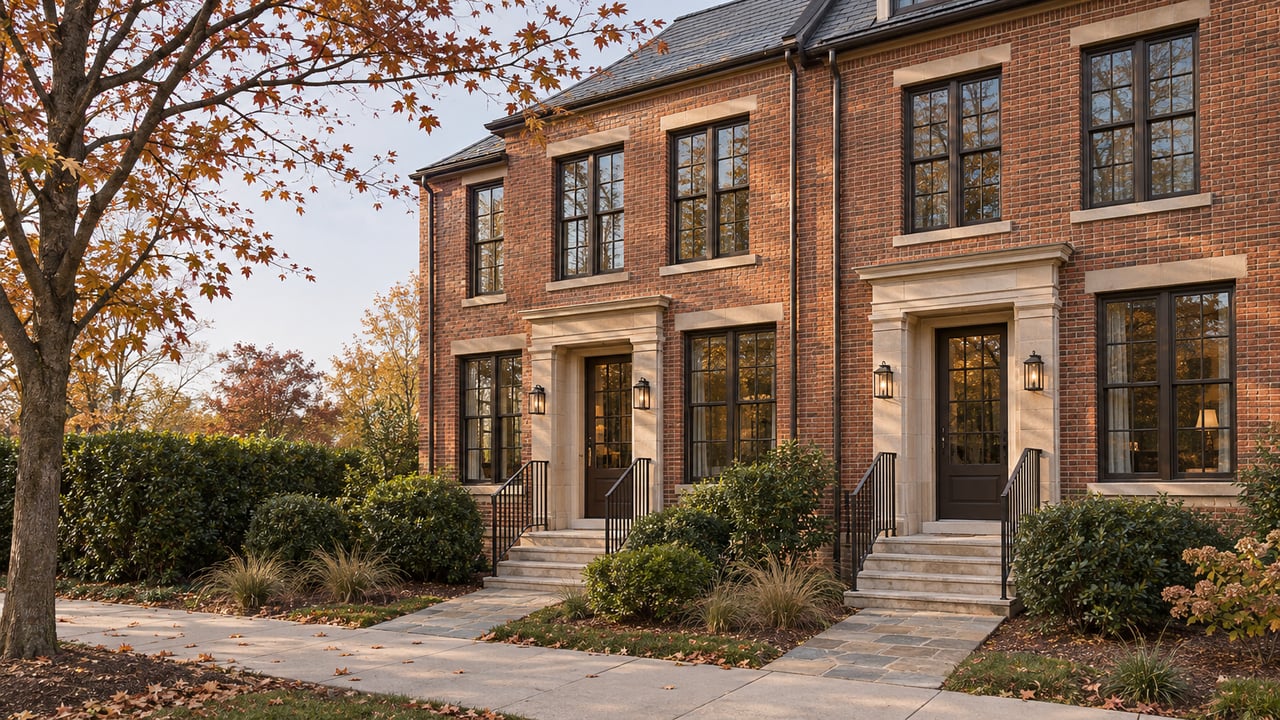
According to Citizen Portal's report, on a single evening in July 2026, Dunwoody's Zoning Board of Appeals took up two neighboring cases on Nureen Circle. The addresses were 1412 and 1414, side by side, and the requests were nearly identical: four variances total to allow new infill construction on lots that, on paper, looked like straightforward teardown candidates. Staff recommended approval, but not because the math was simple. Both parcels run on septic systems with no connection to county sewer, which means each one needs a primary leach field and a second, reserved field held in case the first ever fails. That requirement eats into the buildable area before a builder draws a single wall. The applicant, Lael Manoa, told the board both new homes would be personal residences and that neighbors had already been contacted about landscaping meant to soften the change. The board approved both cases unanimously, with conditions tied to a landscape plan from Brunson & Company Landscape Architects and a two-year window to break ground before the variance expires.
It's a small case. It's also a preview of a question more Dunwoody buyers are going to run into without realizing it, because the city's oldest neighborhoods are entering a phase where the ground under a house is starting to matter more than the house itself.
The math that's changing under older Dunwoody
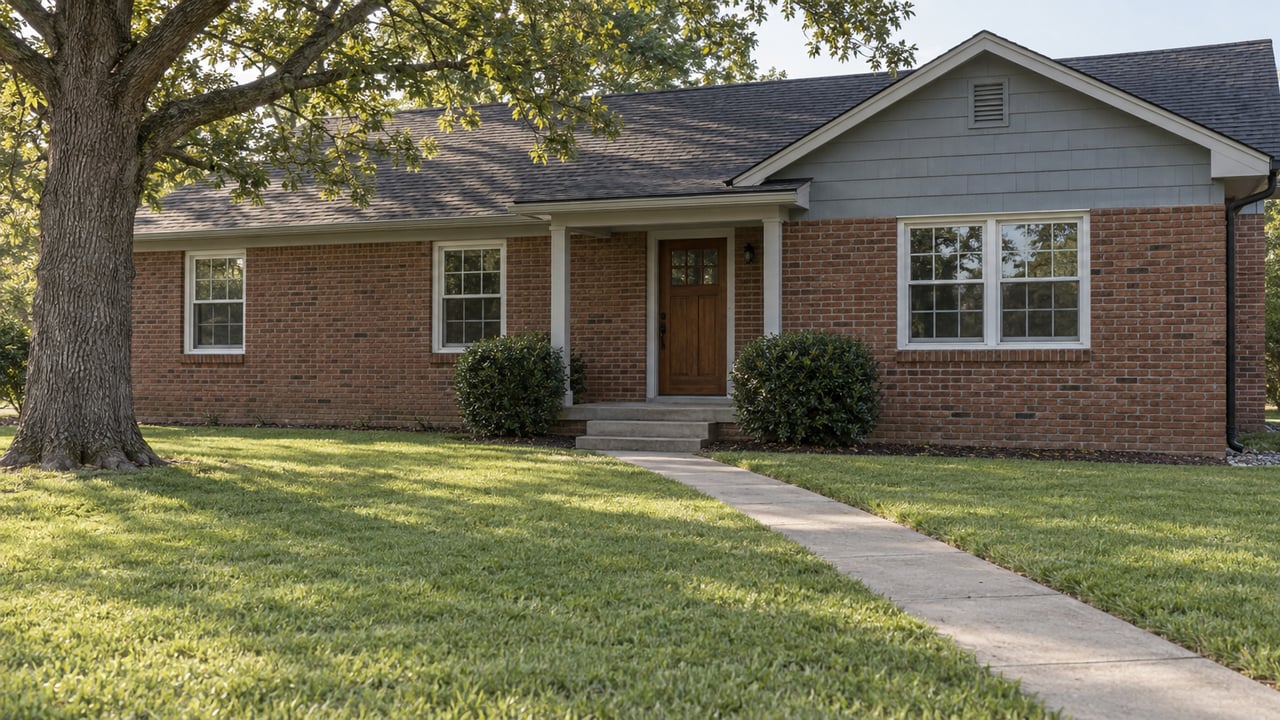
Much of Dunwoody was built out between the 1960s and 1990s. Ranch houses, split-levels, and traditional two-story colonials fill neighborhoods like Vermack, Georgetown, and the streets around Dunwoody Village. Ceilings run low by current standards, kitchens sit closed off from living space, and primary suites are smaller than what buyers expect from a new build. None of that made these homes bad investments for decades. It's only become a live question now that land close to Perimeter Center and I-285 has appreciated faster than the structures sitting on it, to the point that some of these older houses are trading close to what the lot alone is worth.
That shift shows up in the market data, if you know where to look. Over the three months ending May 2026, Dunwoody's median sale price was $712,000, up 5.1% from the same period a year earlier. In the same window, the median price per square foot fell to $247, down 5.2% year over year. Those two numbers moving in opposite directions is the tell. In a market where buyers are paying more for comparable finished square footage, price per square foot climbs alongside the median. When it falls while the median rises, it usually means the mix of what's selling has shifted toward larger, older lots where the number reflects acreage and location more than kitchen finishes. Dunwoody's spring 2026 numbers fit that pattern, and it lines up with what's happening on the ground in Vermack and Georgetown, where teardown-and-rebuild has become a real path for buyers who want a specific address more than they want the house currently sitting on it.
Inventory backs up how tight this has gotten. As of March 2026, the city had roughly 1.7 months of supply, and homes were selling at 99.69% of list price, with a third of transactions closing above asking. That's not a market where a buyer has room to negotiate around a surprise. It's a market where the surprise needs to be caught before the offer goes in.
The line that doesn't show up on the listing sheet
The Nureen Circle cases point to exactly that kind of surprise. A lot's total acreage tells a buyer almost nothing about how much of it is actually buildable if the property relies on septic rather than county sewer. Septic systems can shape how much of a lot remains buildable. On a generous half-acre lot in an older subdivision, that can still leave enough room to build. On a tighter infill parcel, like the two on Nureen Circle, it can force a request to the Zoning Board of Appeals before anything gets built at all.
Here's the practical difference between the two situations:
| Connected to County Sewer | On-Site Septic System | |
|---|---|---|
| Buildable footprint | Governed mainly by standard setbacks | Can be constrained by septic-system requirements |
| Path to rebuild | Standard permitting in most cases | May require a Zoning Board of Appeals variance, as on Nureen Circle |
| How a buyer verifies status | DeKalb County utility connection records | County health department septic permit file |
None of this appears in a standard listing description. A buyer comparing two homes at similar prices in Vermack or Georgetown could be looking at very different rebuild scenarios depending on which side of that table their target address falls on, and the only way to know is to check the utility and septic records directly rather than assume from the lot size.
Georgetown is where the city is actively rewriting the rules
The tension between land value and structure value isn't sitting still, either. Dunwoody held an open house on January 21, 2026, for the Georgetown Small Area Plan, developed with planning firms TSW and Kimley-Horn as a follow-on to the city's recently adopted Comprehensive Plan. Georgetown itself is defined by specific boundaries: Chamblee Dunwoody Road to the west, Cotillion Drive to the south, Peachford Road to the east, and Brook Run Park to the north. That's the same corridor named as a hotspot for mature-lot teardown activity, which makes the timing worth noting rather than incidental.
Dunwoody's Community Development Director, Richard McLeod, described the goal of the plan as providing "a clear, actionable framework for guiding future development" in the area. As of the January open house, that framework was still in its input-gathering phase, with no finalized rule changes tied to specific parcels. For a buyer eyeing a rebuild in Georgetown right now, that means today's zoning rules aren't guaranteed to be tomorrow's, and a lot that pencils out under current setback and buildable-area rules could look different once the small area plan moves from draft to adopted policy.
What to check before you assume the land carries the deal
A few steps turn this from an abstract risk into a manageable one:
- Pull the DeKalb County utility connection record for the specific address, since sewer versus septic status doesn't appear on most listing sheets
- If the lot is on septic, request the county health department's permit history, which will show the size and condition of the existing field
- Ask whether the parcel sits inside the Georgetown Small Area Plan boundary, and if so, check the plan's current status before finalizing any rebuild assumptions
- Build extra time into a purchase timeline if a lot is septic-constrained, since septic constraints can affect a rebuild timeline
None of this changes whether a given Dunwoody neighborhood is a good place to buy. It changes whether a specific lot inside that neighborhood is doing what the median price implies it's doing. In a market moving as fast as Dunwoody's, with homes averaging 16 days on the market as of May 2026, that's not a detail to catch after the offer is already in.
A few questions buyers ask before they act
Does every older Dunwoody lot need a zoning variance to be rebuilt? No. The Nureen Circle cases needed one specifically because septic field requirements reduced the buildable area below what a standard permit would allow. Lots connected to county sewer typically don't face that same constraint.
How do I find out if a specific address is on septic or sewer? DeKalb County keeps utility connection records separately from the MLS. Septic systems carry their own permit history through the county health department, and that file will also show the age and condition of the existing field.
Will the Georgetown Small Area Plan change what I can build on an existing lot? As of its January 2026 open house, the plan was still gathering community input, with no adopted changes tied to individual parcels yet. Anyone with a specific Georgetown address in mind should check the plan's current status rather than assume today's zoning holds indefinitely.
If you're weighing a lot in Georgetown, Vermack, or anywhere else in Dunwoody's older subdivisions and want to understand what you're actually pricing, land or structure, AlpharettaZen Expert Home Advisors can walk through the utility records, septic history, and current zoning status with you before you write an offer. Schedule Your Free Consultation.
This article is general information, not legal, tax or financial advice. Consult a qualified professional about your situation.